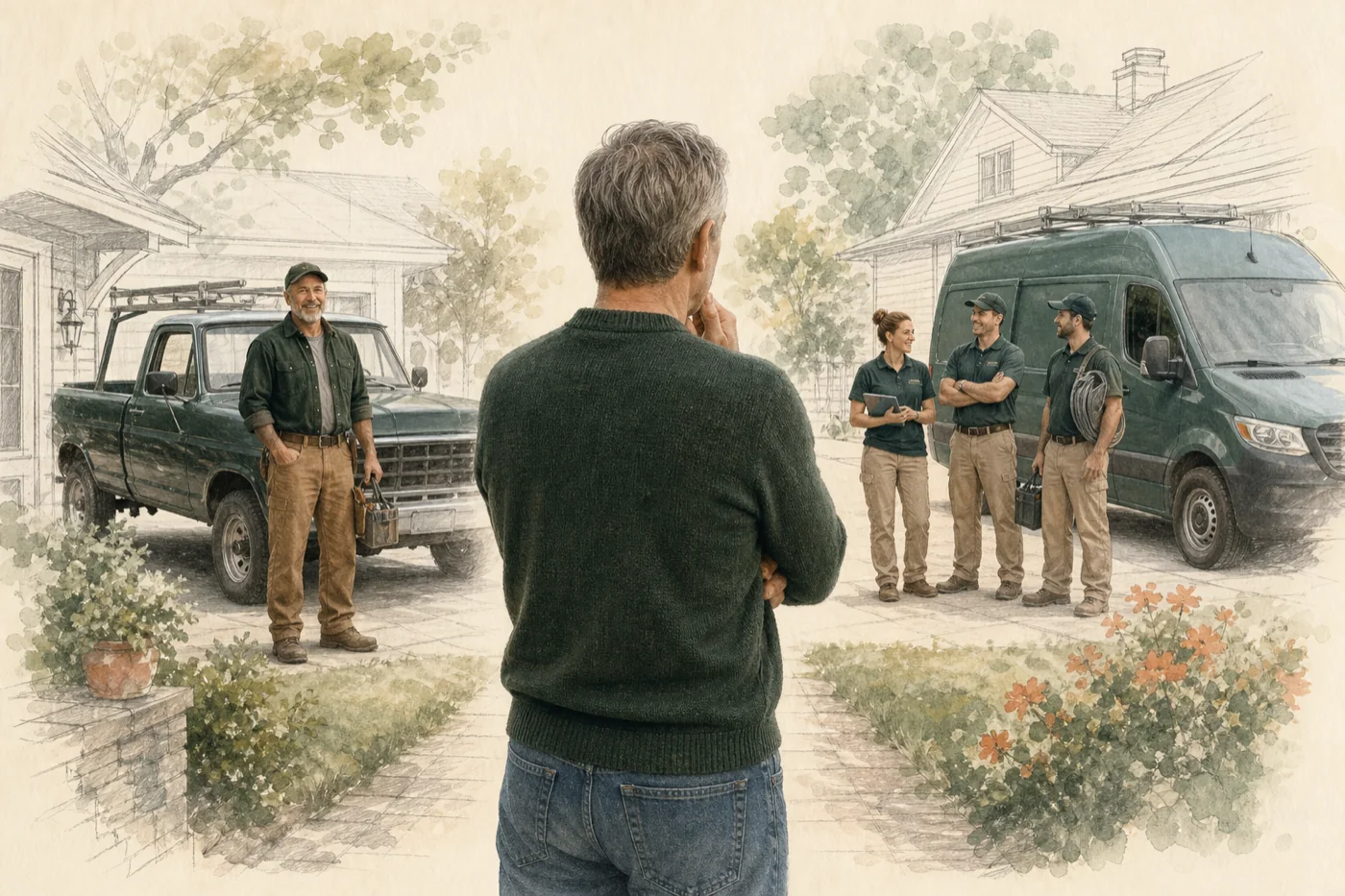
Why company size changes the experience
The person doing the work may be excellent in either model. The difference is often what surrounds the work: scheduling, communication, backup coverage, billing, documentation, equipment, and the ability to absorb surprises.
Where an owner-operator can shine
A good owner-operator may offer direct communication, personal accountability, flexibility, and lower overhead. You often know exactly who will arrive and who makes decisions.
- You value a direct relationship
- The job is within one person’s core skill set
- You can tolerate slower replies during the workday
- Budget matters more than office infrastructure
Where a larger team can shine
A structured company may offer office support, backup crews, broader availability, formal processes, and more capacity for complex or time-sensitive work.
- You expect live communication
- The schedule cannot depend on one person
- The work requires several specialties
- Documentation and account history matter
- You want a company that can scale with the property
The hidden tradeoffs
Personal service can become a bottleneck when the owner is working in the field. A larger company can feel less personal or cost more because the homeowner is also paying for infrastructure. Those are tradeoffs, not defects.
Match the model to the need
For routine mowing at a small property, a dependable solo operator may be perfect. For integrated lawn, irrigation, treatments, and ongoing communication, a professional team may fit better. The useful question is not ‘Who is best?’ but ‘Who is best for this homeowner and this job?’